
Game development guide for 2D, 3D and mobile games
Plan 2D, 3D, Android and iOS games with gameplay loops, multiplayer, levels, rewards, monetization, analytics, live events, leaderboards and backend admin control.
Quick table of contents
Game development needs creative design and strong backend
Game development is more than a playable screen. A serious game project needs gameplay idea, characters, levels, scoring, rewards, user accounts, admin panel, analytics, ads, in-app purchase and update planning. WebStore9 can plan 2D games, 3D games, mobile games and web game direction according to business goals.
2D game development
2D games can include casual gameplay, puzzle mechanics, arcade levels, educational quizzes, rewards, daily challenges, leaderboard and simple monetization. They are useful when the project needs fast launch and easy mobile performance.
3D game development
3D games need environment design, character movement, camera control, lighting, assets, levels, performance optimization and device testing. The visual quality should match the target phone, browser or desktop platform.
Mobile game features
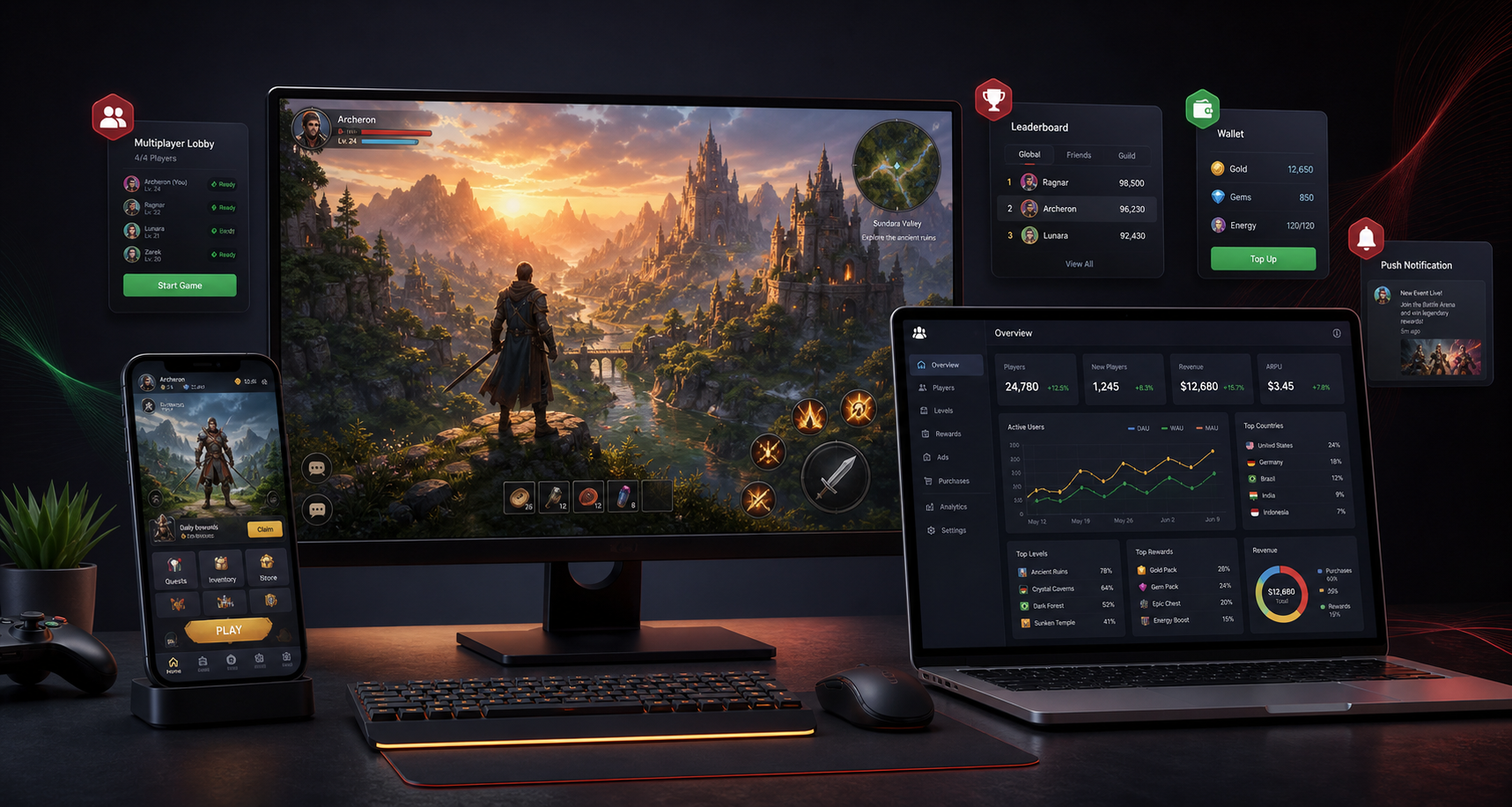
Mobile games can include login, guest mode, profile, levels, missions, coins, gems, daily rewards, push notifications, ads, in-app purchase, wallet, inventory and support. UI should be clear and responsive because players interact quickly.
Multiplayer and backend planning
Multiplayer games need server logic, matchmaking, lobby, rooms, leaderboard, anti-cheat direction, user stats, rewards and event tracking. Admin panels help manage players, levels, campaigns, rewards and reports.
Game launch and marketing
A game needs screenshots, landing page, trailer direction, app store content, privacy policy, analytics, ads strategy and update plan. WebStore9 can connect game development with website, SEO content and marketing pages.
Game monetization, analytics and live operations
Choose the revenue model before development: rewarded ads, subscriptions, cosmetic items, level packs or in-app purchases. The design should keep purchases clear, protect player progress and avoid interrupting the main gameplay loop.
Analytics should track onboarding completion, level attempts, retention, purchases, ad rewards and technical errors. A backend dashboard can manage offers, events, rewards, player support and content updates so the team can improve the game after launch without rebuilding every screen.
WebStore9 project checklist
Before starting this project, write the business goal, target users, important screens, admin modules, required integrations, launch timeline and support expectation. This keeps design, development, testing and marketing direction clear.
- Define the core gameplay loop, target age group, platforms and device performance range.
- List levels, characters, rewards, inventory, missions, leaderboard and player-profile requirements.
- Decide whether multiplayer needs matchmaking, private rooms, chat, anti-cheat controls and real-time servers.
- Plan ads, in-app purchases, subscriptions or paid downloads before UI and backend development.
- Document analytics events, crash reporting, player support and privacy requirements.
- Prepare store screenshots, trailer assets, landing pages and an update schedule for launch.
Ready to discuss this requirement?
Open the related WebStore9 service page or send your requirement with mobile number. WebStore9 can plan the website, app, software, SEO and support workflow according to your business.
Frequently asked questions
What does game development include?
Game development can include game concept, 2D or 3D design, character flow, levels, scoring, rewards, multiplayer planning, ads, in-app purchases, backend dashboard and launch support.
Can WebStore9 plan mobile game development?
Yes. WebStore9 can plan mobile game development for Android and iOS with gameplay screens, login, player profile, leaderboard, rewards and backend admin direction.
What is important before starting a game project?
Before starting a game project, define the target users, game type, levels, art style, device support, monetization, backend features, testing plan and launch timeline.
Can a game website also support SEO and marketing?
Yes. A game website can include landing pages, screenshots, trailer sections, feature details, FAQs, app store links and marketing content to support discovery and ads.